The manner in which the police handled McMichael begs the question: Would they have treated a black man the same way? Now, that's a rhetorical question since we all know how a black man would have been treated. But the more important question is this: At what point do black people get the benefit of the doubt when it comes to self-defense?
(...)
At what point do we get the benefit of the doubt when it comes to self-defense? or is that just a pipedream? Paul, I'll start with you.
PAUL BUTLER, MSNBC LEGAL ANALYST: Jonathan, self-defense laws in the United States are about toxic white masculinity and this old school view of, "Men don't run, they fight" -- that means white men. It's more important to be macho than preserve life.
In this fantasy, the deadly threat always comes from people of color, especially black men, even though we know that when a white person is victimized, in most cases, it's another white person who is responsible. There's not a whole lot of talk about white-on-white crime, but it's real. The data tell us that self-defense works much better for white men when they have killed a black man than the other way around. Black men may get the benefit of the doubt if his victim is another black man, but not when his victim is white.
(...)
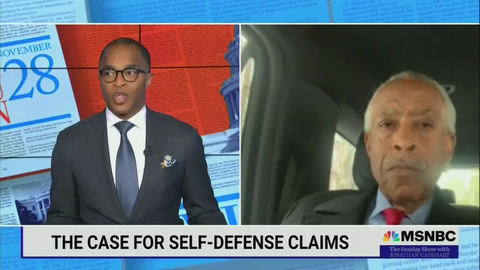
CAPEHART: Reverend Sharpton, you have been at the center of pretty much every racial incident where an unarmed or -- unarmed African American has been hurt or killed -- you've been with their families. I would love your perspective on this question about whether or when self-defense is something that could be utilized by African Americans.
REVEREND AL SHARPTON: Well, I think you must first deal with the fact that the law is based on the premise that blacks were not even equal or human. And when you're dealing with the fact that you have people that feel -- as in the Arbery trial -- that just the presence of nonviolent ministers with bibles was intimidating or that the victim had long, dirty toenails. Before you could even get to self-defense, you've got to get to where we are equally looked upon by the law as human beings.
They try to paint in many of these cases that clearly, because they were black, you cannot apply the law the same way because blacks in and of themselves are more animalistic or less than human and not in the definition of how you deal with self-defense, you cannot ascribe the same thing to them that you do others. I think the underlying racism has to be addressed, and the law must have that in mind in order to have laws that will protect blacks as we get to the discussion of black self-defense or self-defense being used by blacks like it's being used by whites.
So the assumption of self-defense is never there for blacks because the assumption of equality is never there for blacks. And that's what we're wrestling with. When you can stand up in 2021 and talk about a black man was killed had dirty long toenails in front of a jury. When you can stand up in '21 and say, "I don't want no more black pastors in the room because they're intimidating the jury, that is the basis of why the law doesn't work because we're still dealing with people that believe that blacks are less than human and therefore should not have the same interpretation of law for them as with them people.


. Craig Millward