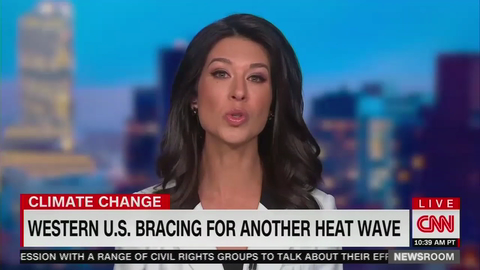
Record heat, raging wildfires -- let's talk about the why. Bill Weir is CNN's chief climate correspondent. Bill, more than two dozen scientists at World Wide Attribution mincing now words in blaming humans for last month's last month's deadly heat wave in the Northwest saying it was virtually impossible about manmade climate change. How important is that statement?
BILL WEIR, CNN CHIEF CLIMATE CORRESPONDENT: I think it's hugely important, Ana. I mean, scientists, as a creed basically, do not want to be considered alarmists. They're very conservative in how they attribute specific events particularly in meteorology and linking them directly. But, as the evidence rolls in, it just becomes undeniable.
These numbers are so far off the charts in a part of the world that is so unused to this kind of weather activity that they have to say this is a once-in-a-thousand year event, and of course it's the result of humanity pumping sort of planet-cooking pollution into the sky for now over a century -- well over a century -- and this is exactly what sort of the worst predictions were. Even five, 10 years ago, this would have been considered alarmist to see what's happening in the Pacific Northwest, but here we are.
CABRERA: I mean, it does seem like this is happening so much sooner than any of us had anticipated. And we know that in California, for example, they just reported its driest rainfall year on record -- more than 125 years of record-keeping -- and that's on top of an existing drought. Where could this be headed?
WEIR: Oh, it's -- nowhere good unfortunately...
if you think about the food pressure of all the volcanos the
[1:43:00 PM]
Colorado river basin keeps 40 million, 50 million people alive. They all share the water. What you're going to see is increasing tension between agricultural farmers and communities how to ration the water between the upper basin states and the lower. The Colorado river contract was written hundreds of years ago. Up in of that applies. Hospitality becomes harder on a less hospitable world. And these tragedies like a hurricane can bring communities together. But it's the long drawn out droughts and famine and look over the fence and wonder where your neighbor suddenly got that water, that's what sort of tears communities apart right now. We're at the beginning of the summer. It could get really tight.
>> You talk about tearing communities apart. There's also this literal burning communities down because of the wildfire risk.
[1:44:01 PM]
Washington state is dealing with a record number of fires this year. It's still not even the middle of summer. All the signs for disaster are there, and yet what I don't understand is there's still a resistance P. What really needs to happen to avert something much worse?
>> That is the multi-million-dollar question, Ana. There's not going to be a pearl harbor of climate change where everybody feels it all at the same file. We adapt to the awe solve quickly. You saw what happened during the pandemic. You can normalize the pain right there. The conversation is shifting not from mitigation stopping the root of the problem, which is burning fossil fuels. That's the core of this. It's adapting to the new normal and strengthening the communities. They're raising the streets in Miami, putting in bigger pumps, changing the zoning in California around fires, and
[1:45:02 PM]
that's the mine shift.
>> Bill, thank you for all of that insight and information. Let's keep the conversation going. It's so important for people to understand.