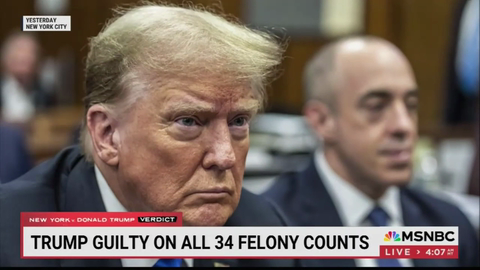
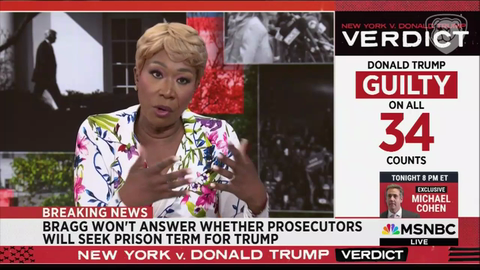
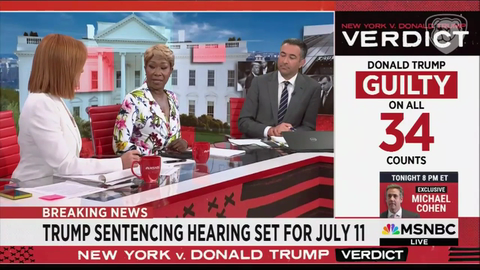
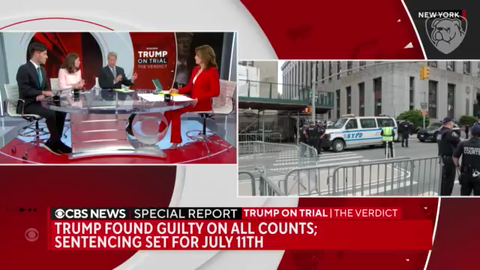
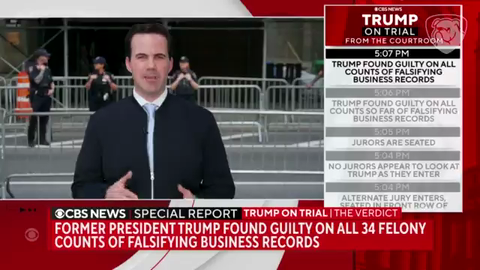
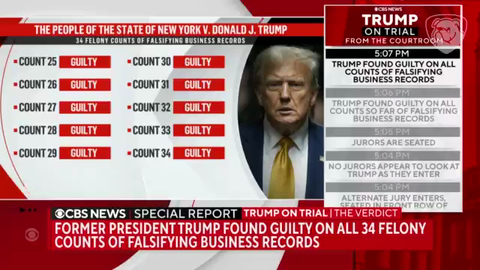
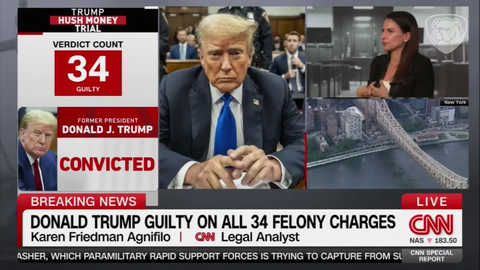
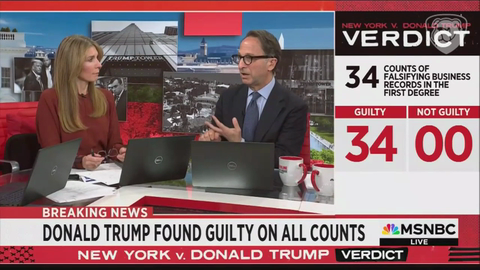
LESTER HOLT: We're back now. And as we noted, this is the first time a former president has been convicted of a crime. NBC News presidential historian Michael Beschloss joins us now. Michael, how do you begin to put this moment into context?
MICHAEL BESCHLOSS: Well, this is almost surreal, Lester. We'll all remember where we were when we got this news today, and that's because as you've been saying, first time anyone who has been president has been convicted of criminal conduct, and also someone who six weeks from this day just about, Donald Trump is likely to be nominated by the Republicans as their presidential candidate. It's going to be divisive. A lot of people will be angry. But 50 years ago this summer, the Supreme Court told president Richard Nixon he had to give up his secret tapes. They showed that he was probably guilty of a number of criminal offenses. Gerald Ford pardoned him, but Gerald Ford, the new president, respected the rule of law. He didn't say the system was rigged. What Gerald Ford said in his inaugural address was this is the system that shows that this is a government of laws and not of human beings. The people rule.
HOLT: This obviously, Michael, is not in isolation. This is occurring during a historically difficult time in terms of division in this country. Is there a historical analogy about how the country might move forward from this moment?
BESCHLOSS: Well, for more than two centuries, we've had a lot of very controversial legal verdicts. Before the Civil War, at the time of the Cold War, you and I could list them for the next three hours. But the point is that here we are, still standing. We're still a republic. The DNA of America is to respect the rule of law, even if we disagree with it. There can be peaceful protests. A defendant- a guilty party can appeal, but in the end we always respect the rule of law that’s the essence of our country.
HOLT: All right. We appreciate your perspective as always, Michael. Thank you.